
Start With a Strong Initial Outreach Sequence
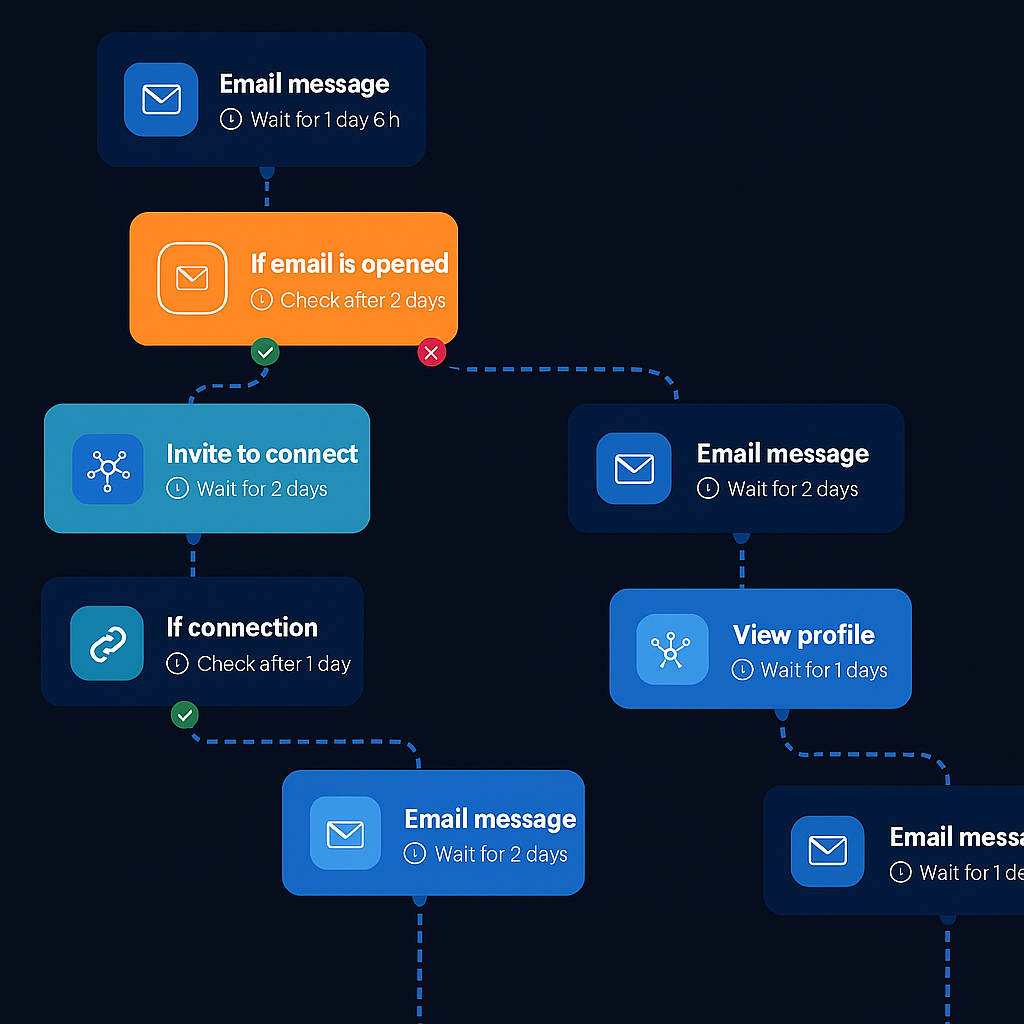
Every strategy begins with the first touchpoint. Your initial outreach sequence should span both email and LinkedIn so prospects see you in multiple channels. The goal isn’t always an immediate meeting—it’s to build awareness and generate early engagement signals.
- Email #1: Personalized intro with a clear reason for outreach
- LinkedIn profile view: A low-friction familiarity signal
- LinkedIn connection request: Light personalization, no pitch
- Email #2: Value-led insight or helpful resource
- LinkedIn message: Brief, conversational follow-up
Track early signals like opens, accepts, replies, and profile views—those become your inputs for what happens next.
Route “Not Ready Yet” Leads Into Nurture Campaigns
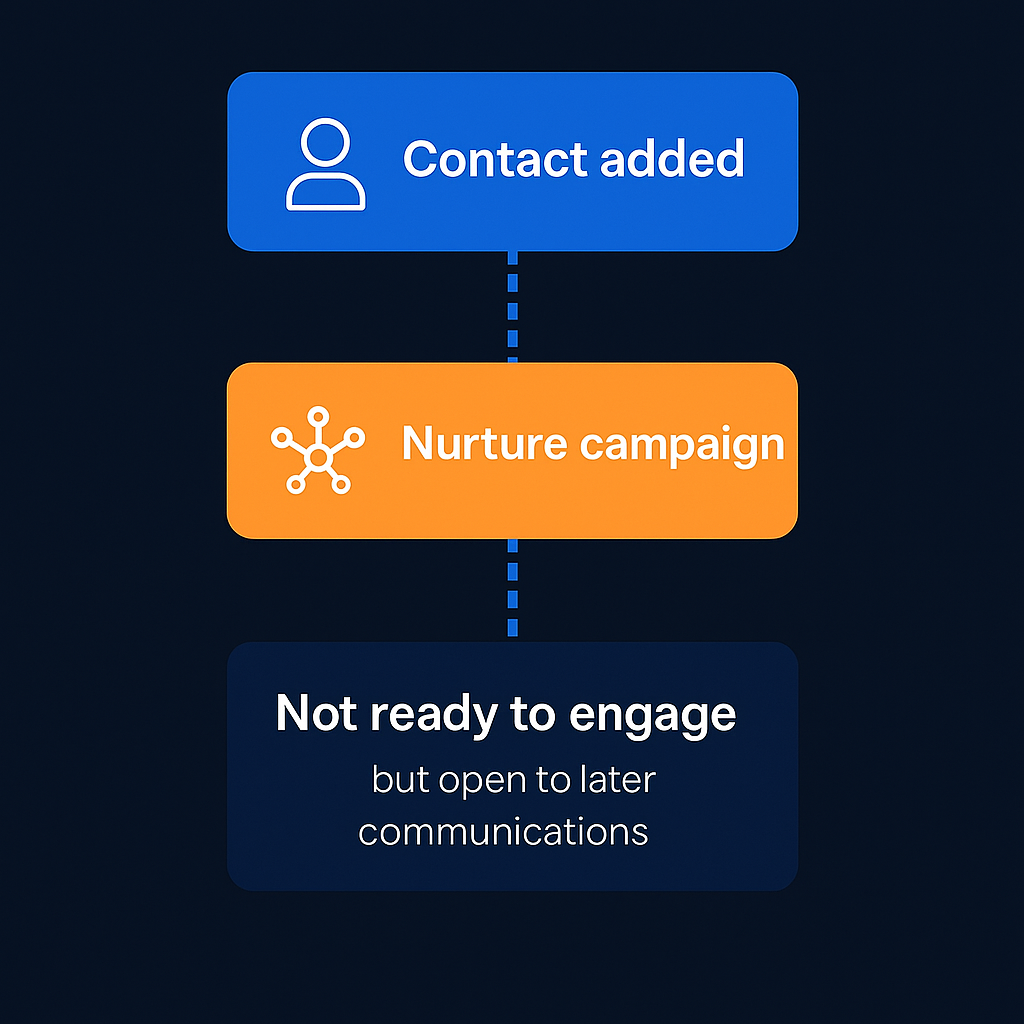
Many leads are interested—but the timing isn’t right. Instead of forcing a sales conversation, move them into a light nurture cadence focused on helpful content and periodic check-ins. Consistency builds trust—and converts “later” into “now.”
- Tag them appropriately in your CRM or outreach platform
- Add them to a nurture cadence that reconnects every 30–45 days
- Share insights, short tips, or relevant case studies
- Keep the tone friendly and no-pressure
Over time, these leads often convert into warm, high-quality opportunities—provided you stay present.
Use Communication Trees Based on Readiness to Engage
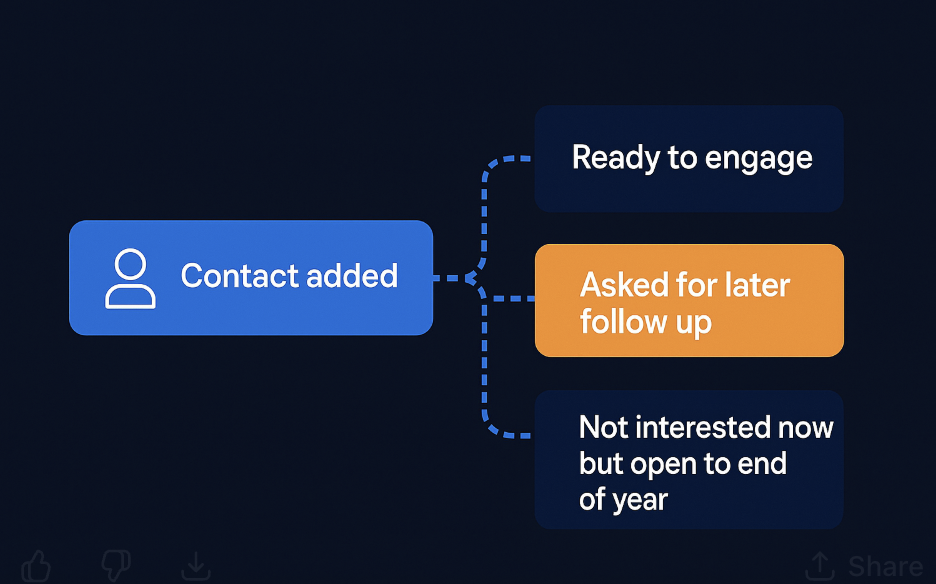
After your initial outreach and follow-ups, each lead will fall into an engagement category. Communication trees help you adapt your next steps based on the signals you’re seeing—so outreach feels timely and relevant, not random.
Move them into a more direct sequence with a clear call-to-action (meeting, quick call, demo). Follow up consistently until the conversation is scheduled.
Respect their timing. Schedule the follow-up sequence, reference their request, and re-engage with relevant context when the date hits.
Place them into a long-term nurture track. Keep soft, periodic touchpoints—then increase outreach as the year-end window approaches.
When behavior and timing guide your messaging, automation doesn’t replace human connection—it amplifies it. Communication trees make that possible.